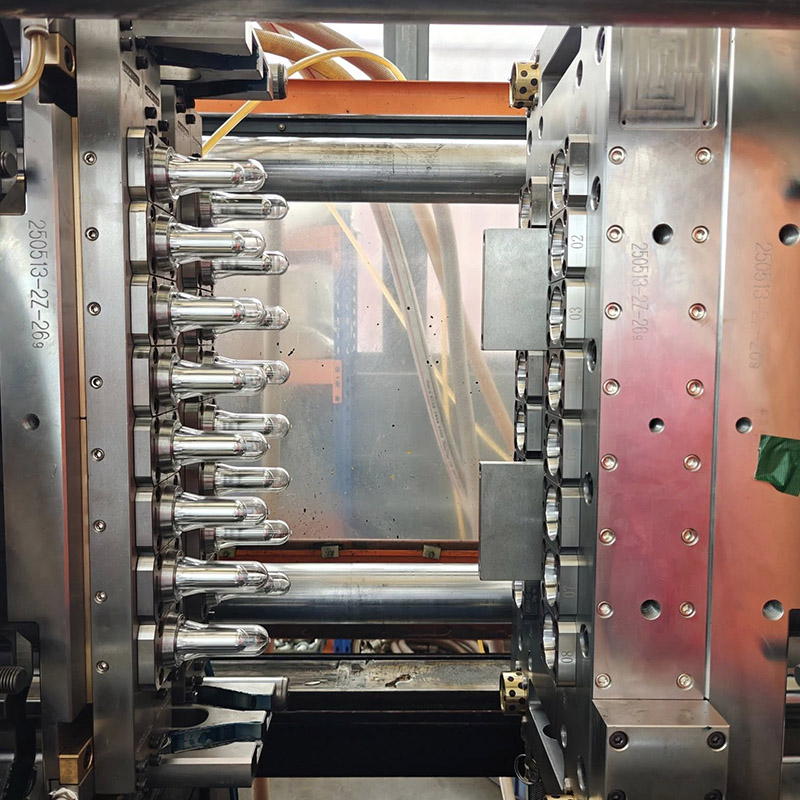
In high-capacity packaging manufacturing, the longevity, thermal efficiency, and precision of a PET preform mold are fundamentally dictated by one critical engineering decision: the selection of core and cavity tool steel. As packaging manufacturers scale production speeds and demand flawless optical clarity, choosing between premium grades such as S136 (AISI 420-modified), 2316 (AISI 420), and P20 (AISI P20) directly impacts lifecycle ROI, cycle times, and maintenance overhead.
At Berni Mould, we leverage decades of engineering expertise as a premier manufacturer specializing in PET preform molds and plastic cap molds. This technical guide evaluates the metallurgical properties, mechanical behaviors, and optimal application scenarios for S136, 2316, and P20 to assist packaging engineers and procurement leaders in making informed tooling investments.
1. Metallurgical Overview of Tool Steel Grades
Selecting the correct mold steel requires balancing corrosion resistance, polishability, thermal conductivity, and core toughness against the abrasive and corrosive nature of PET resin processing (including acetaldehyde generation and moisture sensitivity).
| Steel Grade | AISI Equivalent | Key Characteristics | Corrosion Resistance | Max Polishability | Ideal Component |
|---|---|---|---|---|---|
| S136 | 420 Modified (ESR) | High chromium content, vacuum-degassed ESR, exceptional purity, mirror finish capability. | Superior (Rust-resistant) | A2 / SPI Mirror Finish | Cavities & Cores (High-cavity molds) |
| 2316 | AISI 420 / X38CrMo16 | Pre-hardened stainless steel, excellent wear resistance, good machinability. | High | B3 / Fine Polish | Mold Plates, Core Inserts |
| P20 | AISI P20 / 1.2311 | Pre-hardened alloy tool steel, high toughness, cost-effective machining. | Low (Requires plating) | Standard Polish | Base Plates, Support Frames |
2. Detailed Grade Analysis for PET Preform Tooling
Grade S136 (ESR): The Gold Standard for Cavity and Core Inserts
For high-cavity PET preform molds (ranging from 16 to 96 cavities), S136 processed via Electro-Slag Remelting (ESR) is widely recognized as the industry benchmark. PET resin is processed at elevated temperatures where moisture traces can initiate pitting corrosion in standard carbon steels. S136's high chromium matrix prevents moisture-induced oxidation during prolonged shutdowns or water-line condensation cycles.

Grade 2316: Balanced Performance for Structural Inserts
2316 is a pre-hardened chromium-molybdenum stainless steel supplied typically at 28–32 HRC. While it offers robust corrosion resistance comparable to S136, its carbon and alloy distribution makes it exceptionally well-suited for mold plates, support rings, and core backing plates where moderate wear resistance and excellent dimensional stability are required during deep-pocket machining.
Grade P20: Structural Framing and Cost Optimization
P20 is a premier pre-hardened plastic mold steel ideal for large structural components, clamping plates, and mold bases. Because P20 lacks high chromium levels, it is susceptible to corrosion if exposed to untreated cooling water channels; therefore, it should never be specified for direct-contact preform molding cavities. At Berni Mould, we utilize P20 strictly for robust structural framing where high tensile strength and impact toughness under heavy tonnage clamping are paramount.
3. Key Engineering Parameters for Mold Selection
- Thermal Conductivity and Cooling Efficiency: Rapid cycle times in PET blow molding depend on efficient heat extraction. S136 and 2316 paired with beryllium-copper (CuBe) inserts in high-heat zones (Q = k \cdot A \cdot \Delta T) optimize cooling rates, reducing overall cycle times by up to 15%.
- Wear Resistance and Cavity Longevity: High-speed injection cycles subject gate areas and neck rings to intense abrasive wear. Through-hardening S136 to 48–52 HRC guarantees dimensional stability across multi-million shot lifecycles.
- Maintenance and Anti-Corrosion Protocols: Closed-loop cooling water management combined with stainless steel tooling (S136/2316) eliminates internal scaling and preserves turbulent cooling flow over years of continuous operation.
4. Berni Mould: Your Comprehensive PET Tooling Partner
At Berni Mould, we understand that mold steel selection is only one component of a successful high-output packaging line. As a specialized PET preform and cap mold manufacturing expert, we integrate advanced CAD/CAE cooling simulations, precision CNC machining, and rigorous metallurgical quality control into every project. Whether you are producing 5-gallon water bottle preforms, cosmetic containers, or beverage packaging, our custom-engineered tooling solutions guarantee maximum uptime, minimal maintenance, and superior preform concentricity.