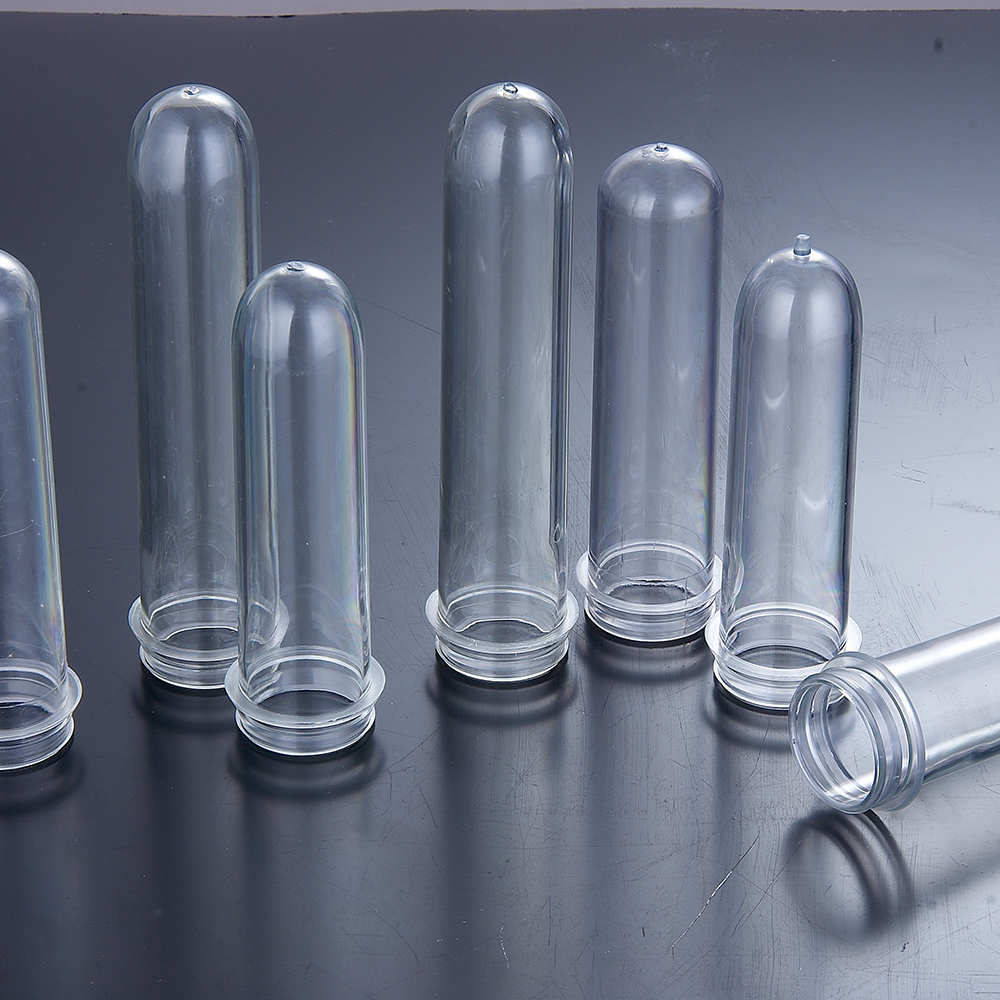
Introduction: Why PET Preform Quality Starts with the Mould
PET preforms are the foundation of high-quality PET bottles. Before a preform enters the stretch blow molding process, its dimensional accuracy, wall thickness distribution, crystallization behavior, and material quality have already determined a large part of the final bottle performance.
Among the most challenging PET preform defects are high acetaldehyde (AA) levels, unwanted crystallization, and eccentricity. These defects can affect bottle taste and odor, transparency, mechanical strength, top-load performance, filling-line stability, and overall production efficiency.
Although many preform defects are traditionally attributed to resin drying, injection molding parameters, or material degradation, the PET preform mould itself is also a critical factor. Poor cavity balance, inconsistent cooling, improper gate design, inaccurate core positioning, and inadequate mould manufacturing tolerances can all contribute to unstable preform quality.
As a professional manufacturer of PET preform moulds and PET cap moulds, Berni Mould focuses on the complete relationship between mould design, precision machining, cooling performance, injection balance, and final PET product quality.
This article provides a practical engineering approach to diagnosing and solving three major PET preform problems:
- High acetaldehyde (AA) levels
- PET preform crystallization
- Preform eccentricity and uneven wall thickness
1. Understanding PET Preform Defects
A PET preform is produced by injection molding PET resin into a precision mould. The resulting preform normally contains:
- Neck finish
- Thread area
- Body
- Gate area
- Core and cavity formed dimensions
During subsequent stretch blow molding, the preform is reheated and biaxially stretched to form the final PET bottle.
This means that a defect visible in the final bottle may actually originate much earlier during preform injection.
A useful troubleshooting principle is:
Do not diagnose the bottle defect alone. Trace the problem back through the blow molding process, preform, injection parameters, resin condition, and PET preform mould.
For professional PET preform production, quality control should therefore evaluate the entire process chain.
2. PET Preform Defect #1: High Acetaldehyde (AA) Levels
What Is Acetaldehyde in PET?
Acetaldehyde, commonly abbreviated as AA, is a volatile degradation by-product generated when PET resin undergoes thermal degradation.
Small amounts of acetaldehyde can naturally occur during PET processing. However, excessive AA levels can become a serious problem, especially for:
- Bottled water
- Mineral water
- Drinking water
- Carbonated soft drinks
- Food packaging
- Sensitive beverage applications
Because acetaldehyde can influence taste and odor, controlling AA generation is especially important for beverage-grade PET packaging.
3. Main Causes of High AA Levels
High AA concentration is usually related to excessive thermal or residence-time exposure.
The main causes include:
3.1 Excessive Melt Temperature
If the PET melt temperature is too high, polymer degradation increases.
The result may include:
- Higher AA generation
- Lower intrinsic viscosity
- Increased yellowing
- Reduced material performance
The injection molding process should therefore use the lowest practical melt temperature that still provides stable filling and good preform quality.
3.2 Excessive Residence Time
PET remaining in the barrel for too long can experience thermal degradation.
This problem can occur when:
- The injection machine is oversized for the production requirement
- Production speed is too low
- The machine operates intermittently
- Melt volume is not properly matched to the screw capacity
For high-volume PET preform production, machine capacity and process parameters should be properly matched.
3.3 Inadequate PET Resin Drying
Moisture is one of the most important factors in PET processing.
Insufficiently dried PET resin can undergo hydrolytic degradation during melting.
Possible consequences include:
- Reduced IV
- Increased degradation
- Higher AA generation
- Lower mechanical performance
- Unstable injection behavior
Therefore, the PET drying system, drying temperature, drying time, dew point, and material handling process should all be checked before blaming the mould.
4. How PET Preform Mould Design Can Affect AA Control
The mould does not directly create acetaldehyde, but mould design can influence the injection process and thermal history of the PET.
A poorly balanced mould can create differences between cavities.
For example, in a multi-cavity PET preform mould:
Unbalanced runner system → inconsistent filling → different pressure/temperature history → cavity-to-cavity variation
This is particularly important for high-cavity PET preform moulds.
Professional mould engineering should consider:
- Hot runner balance
- Gate design
- Runner geometry
- Injection pressure distribution
- Cavity filling sequence
- Cooling-channel configuration
- Cavity-to-cavity dimensional consistency
At Berni Mould, multi-cavity PET preform mould design is approached as a complete flow-and-cooling system rather than simply a collection of individual cavities.
5. Troubleshooting High AA Levels
When AA levels are too high, engineers should check the following sequence:
Step 1: Check PET Resin Drying
Verify:
- Drying temperature
- Drying time
- Dew point
- Airflow
- Resin moisture level
Step 2: Check Melt Temperature
Compare actual melt temperature with the recommended processing range for the specific PET resin.
Step 3: Check Residence Time
Determine whether the material remains in the barrel for excessive periods.
Step 4: Check Injection Parameters
Review:
- Injection speed
- Injection pressure
- Holding pressure
- Screw recovery
- Cycle time
Step 5: Check Hot Runner and Gate Conditions
In a PET preform mould, gate temperature and hot runner stability can influence the thermal history of the polymer.
If only certain cavities show abnormal results, the investigation should move toward mould cavity balance, hot runner performance, and cooling consistency.
6. PET Preform Defect #2: Crystallization
PET is a semi-crystalline polymer.
Under normal injection molding conditions, PET preforms are generally designed to remain highly transparent and relatively amorphous.
Unwanted crystallization can cause:
- Cloudy or milky appearance
- Reduced transparency
- Increased brittleness
- Poor stretching behavior
- Uneven bottle appearance
- Reduced blow molding stability
The most common visual symptom is a white or opaque area on the preform.
7. Why Does PET Preform Crystallization Occur?
Crystallization is strongly influenced by temperature and cooling history.
7.1 Excessive Thermal Exposure
If a section of the preform remains at elevated temperature for too long, crystallization can increase.
This may happen around:
- Thick sections
- Gate areas
- Neck areas
- Poorly cooled cavity sections
7.2 Insufficient Cooling
Cooling is particularly important in PET preform mould design.
If the cooling channels are poorly designed or water flow is insufficient, some areas of the preform may cool more slowly than others.
This can create:
Uneven cooling → different thermal history → localized crystallization
Therefore, cooling performance is not simply a matter of connecting water pipes to the mould.
A professional PET preform mould requires carefully engineered cooling channels around the cavity and core.
8. Gate Area Crystallization
The gate area deserves special attention.
During injection molding, the gate is the final connection between the hot runner system and the preform.
The gate region may experience:
- High shear
- High temperature
- Localized heating
- Different cooling conditions
If the gate design or thermal control is inappropriate, crystallization may appear around the gate.
Possible solutions include:
- Optimizing gate geometry
- Improving gate cooling
- Adjusting gate temperature
- Optimizing injection speed
- Adjusting holding pressure
- Improving mould cooling balance
This is one reason why precision gate design is essential in PET preform mould manufacturing.
9. How to Diagnose PET Preform Crystallization
A useful diagnostic method is to identify the location and pattern of the cloudy area.
If crystallization occurs around the gate:
Investigate:
- Gate temperature
- Gate cooling
- Injection speed
- Gate geometry
- Holding pressure
If crystallization occurs on the body:
Investigate:
- Cooling efficiency
- Wall thickness
- Melt temperature
- Cycle time
- Cavity/core temperature balance
If only one or several cavities show crystallization:
Investigate:
- Cooling-water distribution
- Cavity-specific cooling channels
- Hot runner balance
- Cavity machining
- Local mould temperature differences
This cavity-by-cavity diagnosis is particularly important for multi-cavity PET preform moulds.
10. PET Preform Defect #3: Eccentricity
Preform eccentricity refers to uneven distribution of wall thickness around the preform centerline.
In simple terms:
The preform wall is thicker on one side and thinner on the opposite side.
This defect is extremely important because preform eccentricity can be amplified during stretch blow molding.
Potential consequences include:
- Uneven bottle wall thickness
- Weak bottle sections
- Poor drop resistance
- Poor top-load performance
- Unstable bottle shape
- Uneven material distribution
- Increased scrap rate
For high-speed PET bottle production, eccentricity should be controlled at the preform stage rather than attempting to compensate for it later during blow molding.
11. Main Causes of PET Preform Eccentricity
11.1 Core and Cavity Misalignment
One of the most direct causes is misalignment between the core and cavity.
If the core is not centered correctly, the wall thickness will vary around the preform.
The result may look like:
Thick side ← preform center shifted → Thin side
Precision machining and accurate assembly are therefore essential.
11.2 Poor Mould Manufacturing Accuracy
PET preform mould components require very high dimensional precision.
Important areas include:
- Core
- Cavity
- Neck insert
- Gate insert
- Thread section
- Cooling components
- Guide system
Small dimensional errors can become significant when repeated across many cavities.
11.3 Improper Injection Parameters
Eccentricity is not always caused by mechanical misalignment.
Injection conditions can also influence material distribution.
Potential factors include:
- Injection speed
- Injection pressure
- Holding pressure
- Melt temperature
- Gate condition
- Filling balance
Therefore, mould and process parameters should always be evaluated together.
12. Multi-Cavity PET Preform Moulds: Why Cavity Balance Matters
For a 2-, 4-, 8-, 16-, 24-, 32-, 48-, or higher-cavity PET preform mould, maintaining consistent cavity performance becomes increasingly challenging.
The objective is not simply to manufacture many cavities.
The real engineering objective is:
Every cavity should produce a preform with consistent weight, dimensions, wall thickness, transparency, and thermal history.
A professional multi-cavity mould should therefore focus on:
Hot Runner Balance
Each cavity should receive stable and consistent melt flow.
Cooling Balance
Cooling performance should be as uniform as possible across all cavities.
Dimensional Accuracy
Core and cavity geometry must be tightly controlled.
Gate Consistency
Gate dimensions and positioning must remain consistent from cavity to cavity.
Assembly Precision
The complete mould assembly must maintain accurate alignment during repeated injection cycles.
13. A Practical PET Preform Troubleshooting Matrix
| Defect | Typical Symptom | Possible Cause | Engineering Direction |
|---|---|---|---|
| High AA | Taste/odor problem | Excessive temperature | Optimize melt temperature |
| High AA | Increased degradation | Long residence time | Reduce residence time |
| High AA | IV reduction | Resin moisture | Improve PET drying |
| Crystallization | White/cloudy area | Excessive thermal exposure | Optimize temperature |
| Crystallization | Gate whitening | Poor gate cooling | Improve gate cooling |
| Crystallization | Localized opacity | Uneven cooling | Balance cooling channels |
| Eccentricity | Uneven wall thickness | Core/cavity misalignment | Improve mould alignment |
| Eccentricity | One-side thick wall | Injection imbalance | Optimize filling conditions |
| Cavity variation | Different preform quality | Hot runner imbalance | Balance runner system |
| Cavity variation | Different appearance | Cooling imbalance | Optimize cooling circuit |
14. The Role of Precision PET Preform Mould Manufacturing
A high-quality PET preform mould should not be evaluated only by its appearance or cavity count.
Professional mould performance depends on several engineering factors working together.
Precision Machining
High-precision machining helps maintain consistent cavity dimensions and core positioning.
Advanced Cooling Design
Efficient cooling reduces cycle-to-cycle temperature variation and improves preform dimensio