Introduction
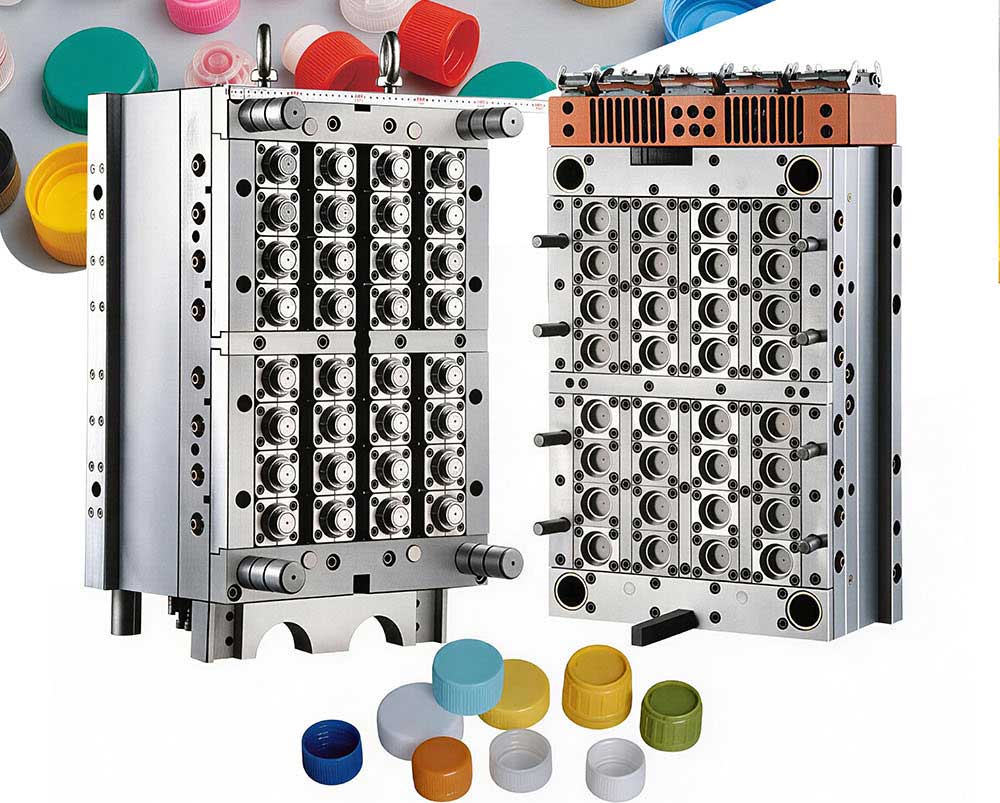
Requesting a quotation for a plastic cap injection mold is much more than asking a manufacturer for a price. A professional Request for Quotation (RFQ) should define the product geometry, plastic material, cavity configuration, runner system, mold steel, cooling design, injection machine compatibility, expected production capacity, and quality requirements.
For beverage manufacturers, edible oil packaging companies, food packaging producers, and plastic closure manufacturers, overlooking even one important specification can result in unexpected tooling costs, unstable production, dimensional inconsistencies, leakage problems, or unnecessary maintenance expenses.
At BERNI MOULD, we specialize in the engineering and manufacturing of high-precision plastic cap molds and PET preform molds. With more than 15 years of industry experience, our engineering approach focuses on helping customers achieve stable multi-cavity production, consistent product quality, optimized cycle times, and long-term tooling reliability.
This technical guide explains the 15 essential specifications that every buyer should confirm before ordering a plastic cap mold. Whether you are sourcing a 28mm water cap mold, an edible oil cap mold, a flip-top cap mold, or a customized functional closure mold, this checklist will help you prepare a more accurate RFQ and evaluate manufacturers more professionally.
Why Is a Detailed Plastic Cap Mold RFQ Important?
A plastic cap mold is a precision-engineered production asset. Its performance directly influences cap dimensions, sealing reliability, production speed, material consumption, and manufacturing costs.
When an RFQ contains incomplete information, mold manufacturers must make assumptions about the product design, resin characteristics, machine parameters, and production requirements. These assumptions can create engineering changes after the project has started.
A detailed RFQ provides three important advantages:
- More accurate quotations: Manufacturers can calculate mold structure, steel requirements, cavity count, machining complexity, and production costs more accurately.
- Better technical communication: Buyers and engineers can agree on critical specifications before manufacturing begins.
- Lower long-term production risks: The mold can be designed around actual production requirements instead of simply meeting the lowest initial tooling price.
The following 15 specifications form a practical technical checklist for purchasing plastic cap injection molds.
1. Final Product Design and 3D CAD Files
The first requirement in any plastic cap mold RFQ is the final product design.
A cap mold manufacturer needs accurate product geometry to determine the core and cavity structure, parting line, gate location, cooling channels, ejection mechanism, and possible side actions.
Ideally, buyers should provide:
- 3D product model in STEP, STP, IGES, or another agreed CAD format.
- 2D engineering drawing in PDF or DWG format.
- Overall cap dimensions and critical dimensional tolerances.
- Wall thickness information and sectional drawings.
- Thread geometry and sealing surface details.
- Product weight and material specifications.
- Existing physical samples, if available.
One important issue is design revision control. If the cap design changes after the quotation or mold design approval, the manufacturer must evaluate whether the modification affects the cavity, core, cooling layout, gate position, or ejection structure.
For complicated closures, including flip-top caps, sports caps, dispensing caps, and child-resistant caps, a complete 3D model is especially important because small geometric changes can influence the functionality of the finished product.
BERNI MOULD engineering recommendation: Always confirm the final product drawing and revision number before approving the mold design. A professional Design for Manufacturability (DFM) review should be completed before machining begins.
2. Cap Application and Functional Requirements
Not all plastic caps have the same structural requirements. A water bottle cap, edible oil cap, pharmaceutical closure, and cosmetic flip-top cap require different mold engineering solutions.
Before requesting a quotation, clearly explain the intended application and the functional characteristics of the cap.
Common plastic cap applications include:
- Beverage caps: Mineral water, purified water, juice, carbonated drinks, and sports drinks.
- Edible oil caps: Cooking oil, olive oil, sunflower oil, and vegetable oil packaging.
- Food packaging caps: Sauce, syrup, condiment, and food container closures.
- Personal care caps: Shampoo, lotion, cosmetics, and household products.
- Medical caps: Pharmaceutical packaging and child-resistant closures.
- Industrial caps: Engine oil, lubricants, chemical containers, and specialty packaging.
Also specify whether the cap requires any special features:
- Tamper-evident bands.
- Pull-ring or tear-off structures.
- Integrated pouring spouts.
- Anti-drip or dispensing functions.
- Flip-top living hinges.
- Child-resistant or senior-friendly mechanisms.
- Logo embossing and date coding.
These features directly influence mold complexity, core and cavity design, sliders, lifters, ejection systems, and production cycle time.
For example, a flip-top cap requires precise living-hinge geometry and controlled ejection to avoid damaging the hinge during demolding. An edible oil cap may require additional sealing structures and pull-ring mechanisms to prevent leakage and provide tamper evidence.
Key RFQ question: What specific functions must the finished cap perform, apart from simply closing the bottle?
3. Neck Finish and Bottle Compatibility
Neck finish compatibility is one of the most important specifications in plastic cap mold manufacturing.
A cap must fit the corresponding bottle neck correctly. Incorrect thread dimensions, pitch, sealing geometry, or engagement depth can cause leakage, excessive opening torque, poor capping performance, or inconsistent tamper-evident functionality.
Common bottle closure specifications include:
- 28mm standard water bottle closures.
- PCO 1881 beverage neck finishes.
- PCO 1810 neck finishes.
- 30/25mm beverage closures.
- 38mm wide-mouth closures.
- 24/410 and 28/400 cosmetic closures.
- Customized neck finishes for edible oil and specialty packaging.
Buyers should provide the bottle neck drawing or an approved reference sample whenever possible.
Important dimensions to verify include:
- Thread major and minor diameters.
- Thread pitch and profile.
- Thread engagement height.
- Sealing land diameter and geometry.
- Neck support and tamper-evident ring clearance.
- Cap-to-bottle axial engagement.
A particularly important consideration is the relationship between PET preform molds and plastic cap molds. The preform mold produces the PET preform, while the cap mold produces the closure. Both tools must follow compatible neck finish specifications to ensure that the final bottle and cap assembly works correctly.
For customers purchasing both types of tooling, BERNI MOULD can provide integrated PET preform and cap mold engineering solutions.
Engineering recommendation: Do not rely on nominal dimensions such as 28mm alone. Always confirm the complete neck finish standard and sealing interface.
4. Plastic Resin Grade and Material Properties
The plastic resin determines how the material flows, shrinks, cools, and performs after molding. Therefore, simply specifying PP or PE is not always sufficient for an accurate mold quotation.
Common materials used in plastic cap production include:
- PP (Polypropylene): Widely used for beverage closures, flip-top caps, and food packaging.
- HDPE (High-Density Polyethylene): Commonly used for water closures, oil caps, and industrial packaging.
- LDPE (Low-Density Polyethylene): Suitable for selected flexible closure and dispensing applications.
- ABS: Used in certain functional and decorative closure designs.
- TPE / TPU: Used in specialized sealing and functional components.
The RFQ should identify the exact resin grade whenever possible.
Other important material information includes:
- Melt flow index (MFI or MFR).
- Recommended processing temperature.
- Material shrinkage data.
- Color masterbatch and additives.
- Recycled material or regrind content, if applicable.
- Food-contact or pharmaceutical requirements.
Different resin grades can produce different shrinkage and flow characteristics, even when they belong to the same polymer family.
For example, the mold design for a PP flip-top cap must consider living-hinge performance, material flow direction, and fatigue resistance. The mold for an HDPE edible oil cap must prioritize dimensional stability, sealing performance, and consistent thread formation.
BERNI MOULD recommendation: Provide the exact resin brand and grade rather than only specifying the general material category. If the resin has not yet been selected, inform the mold manufacturer so that material assumptions can be reviewed during DFM.
5. Critical Dimensions and Tolerance Requirements
Dimensional accuracy determines whether a cap can be properly fitted, tightened, opened, and sealed on the intended bottle.
However, not every dimension requires the same tolerance. Applying extremely tight tolerances to non-functional surfaces can increase manufacturing costs without improving the final product.
Buyers should identify the critical dimensions that directly influence product performance.
Typical critical areas include:
- Internal and external thread dimensions.
- Cap height and outside diameter.
- Sealing surface dimensions.
- Inner plug or liner geometry.
- Tamper-evident band dimensions.
- Frangible bridge thickness.
- Flip-top hinge dimensions.
- Functional valve and dispensing openings.
For precision closure applications, BERNI MOULD's engineering specifications include dimensional accuracy targets of ±0.005 mm for selected critical features, depending on the product and measurement requirements.
Such a tolerance should not automatically be applied to every product dimension. It must be defined according to the drawing, measurement method, resin behavior, and functional requirements.
Buyers should also specify whether dimensional inspection reports are required for every cavity or only representative samples.
Important: A mold can be manufactured with high machining precision, but the final molded cap dimensions also depend on resin shrinkage, processing conditions, packing pressure, cooling, and machine stability.
6. Cap Weight, Wall Thickness, and Lightweighting Targets
Cap weight is directly related to material consumption and long-term production costs.
In high-volume packaging operations, even a small reduction in the weight of each cap can create significant savings across millions of products.
However, lightweighting must be achieved without compromising mechanical strength, sealing reliability, thread engagement, or tamper-evident performance.
The RFQ should include:
- Target cap weight in grams.
- Acceptable weight tolerance.
- Nominal wall thickness.
- Minimum wall thickness in critical areas.
- Required compression and impact performance.
- Opening and closing torque requirements.
- Leakage and sealing performance requirements.
For lightweight beverage caps, uniform material distribution is essential. Uneven wall thickness can lead to inconsistent shrinkage, deformation, and dimensional variation.
For edible oil closures, lightweighting must also preserve the strength of the sealing area and the performance of any integrated pull-ring or pouring structure.
Professional mold design should consider gate position, filling balance, cooling efficiency, and material distribution together rather than simply reducing cavity wall dimensions.
7. Number of Cavities and Required Production Capacity
Cavity count is one of the most important factors influencing the price, size, complexity, and production capacity of a plastic cap mold.
Common configurations vary according to the cap type and production requirements. Multi-cavity solutions may include 8, 16, 24, 32, 48, and 64 cavities, with other customized configurations available for specialized projects.
When selecting a cavity count, buyers should consider:
- Required caps per hour.
- Annual production volume.
- Number of production shifts.
- Injection machine capacity.
- Target cycle time.
- Expected machine utilization.
- Initial tooling investment.
The theoretical hourly production capacity can be estimated using the following formula:
Theoretical Output = Number of Cavities × 3600 ÷ Cycle Time in Seconds
For example, a 32-cavity cap mold operating at an 8-second cycle theoretically produces:
32 × 3600 ÷ 8 = 14,400 caps per hour.
This is theoretical output. Actual production will be lower depending on machine availability, process stability, quality rejection, and production interruptions.
Choosing more cavities is not automatically the best solution. A high-cavity mold requires sufficient injection capacity, balanced filling, effective cooling, and reliable ejection.
For customers with growing production demand, a professional manufacturer should evaluate the relationship between mold investment and long-term production cost.
BERNI MOULD engineering approach: We evaluate cavity count according to the customer's actual production target, cap geometry, resin, and injection machine rather than recommending the highest cavity configuration by default.
8. Hot Runner or Cold Runner System
The runner system has a significant influence on material consumption, filling balance, cycle efficiency, and mold maintenance.
There are two main configurations used in plastic cap injection molds.
Hot Runner System
A hot runner system maintains the resin in a heated flow channel, allowing molten plastic to reach the cavities without creating a conventional solid runner for every injection cycle.
Its main advantages include:
- Reduced runner material waste.
- More efficient material utilization.
- Potentially shorter production cycles.
- Improved multi-cavity filling balance.
- Better suitability for high-volume production.
Hot runner systems can use open-gate or valve-gate configurations. Valve gates provide additional control over melt flow and gate opening, making them suitable for selected precision and functional cap applications.
BERNI MOULD integrates hot runner solutions from established suppliers such as YUDO and Mold-Masters, depending on project requirements.
Cold Runner System
A cold runner system allows the resin to solidify in the runner channels during each injection cycle.
It may be suitable for lower-volume applications, specific mold structures, or projects where a simpler tooling configuration is preferred.
However, buyers should consider runner material consumption, cycle time, and possible regrinding requirements when comparing costs.
Which system is better?
There is no universal answer. The correct choice depends on production volume, cap geometry, resin, material cost, machine capability, and total investment.
Ask the manufacturer to explain the proposed runner structure, temperature control zones, gate type, maintenance requirements, and expected production benefits.
9. Mold Steel Grade and Heat Treatment
Mold steel selection directly affects wear resistance, corrosion resistance, machining performance, polishing quality, and expected service life.
For plastic cap molds, commonly considered steel grades include:
- S136: Stainless tool steel suitable for applications requiring corrosion resistance and high-quality polishing.
- 2316: Corrosion-resistant mold steel commonly considered for packaging and food-related applications.
- M310: Stainless mold steel suitable for selected precision and polished cavity applications.
- NAK80: Pre-hardened steel used in certain precision mold components.
- H13 / SKD61: Tool steels used in applications requiring good strength and wear resistance, including selected moving components.
- 718H: Pre-hardened mold steel commonly used for mold bases and selected tooling applications.
Steel selection should be based on the actual mold structure rather than brand names alone.
Buyers should confirm:
- Steel grade for cavities and cores.
- Steel grade for sliders and lifters.
- Mold base material.
- Heat treatment process.
- Target hardness in HRC.
- Material certificates and inspection reports.
- Any surface coating or special treatment.
For high-volume beverage and edible oil cap molds, corrosion resistance and dimensional stability are especially important because the tooling must maintain consistent performance over extended production periods.
BERNI MOULD uses materials including S136, 2316, 718H, and other application-specific steels, with heat treatment and precision machining selected according to the tooling requirements.
10. Mold Base, Standard Components, and Interchangeability
The mold base provides the structural foundation for the complete injection mold assembly.
Although buyers often focus on cavity steel and cavity count, the quality of the mold base and standard components also influences alignment, rigidity, maintenance, and long-term operating stability.
The RFQ should clarify:
- Mold base dimensions and construction.
- Guide pillars and guide bushes.
- Support pillars and locating components.
- Ejector plates and return systems.
- Standard component brands.
- Hydraulic and pneumatic connections.
- Replaceable cavity and core inserts.
- Customer-specific mold standards.
Common mold standards include HASCO, DME, FUTABA, LKM, and customized specifications.
Interchangeable cavity inserts are particularly useful for manufacturers producing multiple cap designs or requiring future changes to logos, date codes, or selected product details.
A modular mold structure can simplify maintenance and reduce the need to replace larger tooling components when only one insert is damaged.
For international buyers, it is also important to clarify whether standard components can be sourced locally in their country.
11. Cooling System Design and Target Cycle Time
Cooling efficiency is one of the major factors affecting injection molding cycle time.
Even when filling and packing are completed quickly, insufficient cooling can cause deformation, shrinkage variation, sticking, and dimensional instability.
A professional plastic cap mold should have a cooling system designed around the actual cap geometry.
Important cooling considerations include:
- Cooling channels around the cavity and core.
- Independent cooling circuits for different mold areas.
- Cooling around the thread and sealing regions.
- Cooling near thick-wall sections.
- Spiral baffles and other flow-distribution structures.
- Water inlet and outlet positions.
- Cooling flow rate and pressure requirements.
- Temperature balance between mold halves.
For complicated closures, such as flip-top caps and functional dispensing caps, different areas may require separate cooling strategies.
Conformal cooling and specialized inserts can improve heat transfer in selected mold structures.
However, the shortest possible cycle time should never be the only design target. The finished cap must still meet dimensional, mechanical, sealing, and appearance requirements.
Cycle time varies according to the product structure, resin, mold temperature, injection machine, and cooling design. For example, BERNI MOULD's product information illustrates different cycle ranges for 28mm water caps, edible oil caps, and flip-top caps.
Therefore, buyers should request a realistic target cycle time supported by a defined material, machine, and product quality standard.
12. Ejection System, Thread Release, and Special Mechanisms
The ejection system must remove molded caps from the cavities without damaging their geometry or functional features.
Plastic cap molds may require different ejection structures depending on the cap design.
Common ejection and release mechanisms include:
- Stripper plate systems.
- Stripper ring systems.
- Ejector pin systems.
- Thread stripping mechanisms.
- Mechanical or hydraulic unscrewing systems.
- Sliders and lifters.
- Multi-stage ejection systems.
For standard threaded closures, the thread core and release structure must be designed to allow reliable demolding without damaging the internal threads.
For tamper-evident caps, the mold must release the security band without deformation or inconsistent bridge breakage.
For flip-top closures, the ejection sequence must protect the living hinge and ensure consistent part release.
Functional cap molds may require additional precision slides, valve structures, or specialized inserts for push-pull mechanisms and dispensing openings.
Important RFQ question: How does the manufacturer plan to release the finished cap, and how will the proposed mechanism affect cycle time, maintenance, and production reliability?
13. Surface Finish, Venting, and Product Appearance
Surface quality is important not only for appearance but also for sealing performance, cleaning, product release, and functional reliability.
Different areas of a cap may require different surface finishing specifications.
For example:
- Sealing surfaces may require precision polishing.
- Visible external surfaces may require high-gloss polishing or a specified texture.
- Logo areas may require controlled engraving and surface definition.
- Thread areas require accurate machining and a suitable surface finish.
- Food-contact tooling may require hygienic surface treatment.
BERNI MOULD's food packaging cap mold specifications include mirror-polished cavity surfaces, with selected applications targeting Ra ≤ 0.02 μm.
Another important consideration is mold venting.
During injection, air inside the cavity must escape as the molten resin fills the mold. Poor venting can contribute to:
- Burn marks.
- Incomplete filling.
- Short shots.
- Weld line problems.
- Inconsistent surface appearance.
Venting locations and dimensions must be designed according to the resin, filling pattern, mold geometry, and actual process conditions.
Buyers should specify the required surface finish, texture standard, logo details, and appearance inspection criteria in the RFQ.
14. Injection Machine Compatibility and Technical Parameters
A high-quality mold cannot deliver stable production if it is incompatible with the injection molding machine.
Before manufacturing begins, the mold supplier should receive the technical information of the intended injection machine.
Important machine specifications include:
- Injection machine manufacturer and model.
- Clamping force.
- Maximum and minimum mold thickness.
- Platen dimensions.
- Tie-bar spacing.
- Maximum injection volume and shot weight.
- Screw diameter and injection capacity.
- Nozzle dimensions and radius.
- Ejector stroke and ejector force.
- Hot runner controller connections.
- Hydraulic and pneumatic connections.
- Cooling water connections.
For high-cavity molds, injection capacity and filling balance are particularly important. The machine must supply sufficient material to fill all cavities within the required cycle time.
Clamping force must also be evaluated according to the projected area of the molded parts, cavity pressure, and machine operating conditions.
If the mold will be used on more than one injection machine, provide the technical specifications of every intended machine.
BERNI MOULD recommends checking the machine interface before finalizing the mold design. This helps reduce the risk of installation problems and unnecessary modification costs.
15. Mold Life, Quality Validation, Warranty, and Technical Documentation
The final RFQ specification should define how the mold will be tested, accepted, maintained, and supported after delivery.
A quotation should not focus exclusively on the initial tooling price. Buyers should also understand the expected service life and the manufacturer's quality assurance process.
A. Expected Mold Service Life
Specify the required mold life in injection cycles or shots.
The expected service life depends on:
- Cavity and core steel grades.
- Heat treatment and surface treatment.
- Resin characteristics and additives.
- Production speed and operating conditions.
- Maintenance frequency.
- Wear of moving components.
Ask the supplier to explain the conditions under which the stated mold life is expected to be achieved.
B. Mold Trial and Acceptance Criteria
Before shipment, the mold should undergo a trial production process under agreed conditions.
The buyer and manufacturer should establish clear acceptance criteria, including:
- Actual cycle time.
- All-cavity filling balance.
- Cap weight consistency.
- Critical dimensional inspection.
- Thread fit and sealing performance.
- Opening and closing torque, where applicable.
- Tamper-evident band performance.
- Surface appearance and defect inspection.
- Stable continuous operation.
For complex molds, cavity-by-cavity sample identification and dimensional reports are particularly valuable.
C. Technical Documents and Spare Parts
Buyers should confirm which technical documents will be supplied with the mold.
A professional handover package may include:
- Final 3D mold assembly drawings.
- 2D mold drawings.
- Electrical and hydraulic diagrams.
- Hot runner system documentation.
- Steel material certificates.
- Inspection reports.
- Spare parts list.
- Operating and maintenance instructions.
- Recommended maintenance intervals.
D. Warranty and After-Sales Support
Clarify the warranty period, coverage, exclusions, spare parts policy, and technical support arrangements before placing the order.
For international customers, remote technical assistance and the availability of replacement components can significantly reduce production downtime.
A reliable mold manufacturer should be prepared to support customers beyond the initial manufacturing and delivery stages.
Plastic Cap Mold RFQ Checklist: Quick Reference Table
The following table summarizes the 15 specifications that buyers should prepare before requesting a quotation.
| No. | Technical Specification | Information Required |
|---|---|---|
| 1 | Product Design | 3D CAD, 2D drawings, samples, revision number |
| 2 | Application | Water, beverage, oil, food, cosmetic, medical, or industrial |
| 3 | Neck Finish | PCO 1881, 1810, 30/25, 38mm, or custom |
| 4 | Plastic Material | PP, PE, HDPE, resin grade, MFI, additives |
| 5 | Dimensions and Tolerances | Threads, sealing areas, critical dimensions |
| 6 | Cap Weight and Wall Thickness | Target weight, thickness, lightweighting requirements |
| 7 | Cavity Count | Required hourly output and annual production volume |
| 8 | Runner System | Hot runner, cold runner, open gate, valve gate |
| 9 | Mold Steel | S136, 2316, M310, 718H, H13, heat treatment |
| 10 | Mold Base | Dimensions, standards, components, interchangeability |
| 11 | Cooling System | Cooling circuit, water connections, target cycle time |
| 12 | Ejection System | Stripper, ejector pins, unscrewing, slides, lifters |
| 13 | Surface and Venting | Polishing, texture, venting, appearance requirements |
| 14 | Machine Compatibility | Machine model, tonnage, platen, shot capacity, interfaces |
| 15 | Quality and After-Sales | Mold life, trial criteria, warranty, documents, spare parts |
How to Compare Plastic Cap Mold Manufacturers Beyond Price
After receiving several quotations, buyers should avoid making decisions based only on the lowest price.
Two manufacturers may quote for the same cavity count but provide significantly different tooling structures, steel grades, runner systems, cooling designs, and quality validation procedures.
Before selecting a supplier, compare the following factors:
- Engineering capability: Does the manufacturer provide DFM analysis, 3D mold design, and filling or cooling simulation?
- Manufacturing capability: Does the factory have CNC machining, EDM, wire cutting, and precision inspection equipment?
- Steel quality: Are the proposed steel grades and heat treatment processes clearly documented?
- Hot runner technology: Can the supplier explain the runner configuration and temperature control system?
- Trial capability: Can the manufacturer perform mold trials and verify production performance?
- Quality control: Are dimensional inspection and cavity consistency reports available?
- After-sales service: Can the supplier provide spare parts, maintenance guidance, and technical support?
A professional manufacturer should be able to explain why a particular mold structure is recommended and how it will influence production efficiency over the entire service life of the tooling.
Why Choose BERNI MOULD for Plastic Cap and PET Preform Mold Solutions?
Choosing a mold manufacturer is a long-term investment decision. The right supplier should understand not only mold manufacturing but also the actual production requirements of plastic packaging factories.
BERNI MOULD, operated by Taizhou Berni Machinery Co., Ltd., is a professional manufacturer of plastic cap molds and PET preform molds based in Huangyan, Taizhou, Zhejiang, China.
With more than 15 years of industry experience, our team focuses on precision tooling solutions for beverage, edible oil, food packaging, pharmaceutical, personal care, and industrial packaging applications.
1. Comprehensive Plastic Cap Mold Portfolio
Our product range includes:
- 28mm water cap molds.
- Water and beverage cap molds.
- Edible oil cap molds.
- 5-gallon water cap molds.
- Flip-top cap molds.
- Food packaging cap molds.
- Medical cap molds.
- Personal care cap molds.
- Engine oil cap molds.
- Customized functional cap molds.
Each mold is engineered according to the specific cap geometry, resin, production target, and machine requirements.
2. Precision Mold Design and Manufacturing
Our manufacturing process integrates CAD/CAE/CAM engineering, 5-axis CNC machining, EDM, wire cutting, heat treatment, and CMM inspection.
These processes help maintain dimensional consistency and ensure that critical mold components meet the required engineering specifications.
3. Advanced Hot Runner Solutions
We provide hot runner configurations using established systems such as YUDO and Mold-Masters, depending on the project requirements.
Proper runner design and temperature control help improve filling balance, reduce material waste, and support stable multi-cavity production.
4. PET Preform Mold and Cap Mold Integration
In addition to plastic cap molds, BERNI MOULD also manufactures PET preform molds for water, carbonated beverages, juice, edible oil, and food packaging applications.
Our PET preform mold portfolio includes multi-cavity configurations and customized neck finishes such as PCO 1881, PCO 1810, 30/25, and wide-mouth designs.
For customers developing a complete PET packaging project, having one engineering partner for both preform and cap tooling can simplify technical communication and help ensure neck finish compatibility.
Explore our PET Preform Mold Solutions to learn more.
5. Engineering Support from Design to Production
Our working process covers inquiry evaluation, drawing review, mold design, precision manufacturing, mold trials, delivery, and after-sales technical support.
We aim to provide practical solutions that help customers improve production stability, reduce unnecessary tooling costs, and achieve reliable long-term operation.
Learn more about our Plastic Cap Mold Solutions and customized engineering capabilities.
Frequently Asked Questions About Plastic Cap Mold RFQs
Q1. What information should I send when requesting a plastic cap mold quotation?
At a minimum, provide a 3D cap drawing, 2D technical drawing, material type, neck finish, cap weight, target production capacity, and injection machine specifications. If available, include physical samples and existing mold information.
Q2. Can I request a cap mold quotation using only a product sample?
Yes, a physical sample can support an initial technical evaluation. However, a 3D CAD model and dimensional drawing are recommended for accurate mold design, tolerance definition, and quotation preparation.
Q3. How many cavities should a plastic cap mold have?
The ideal cavity count depends on required production output, cycle time, annual demand, injection machine capacity, and tooling investment. A professional manufacturer should calculate the appropriate configuration rather than automatically recommending the highest cavity count.
Q4. Which is better for high-volume cap production: hot runner or cold runner?
Hot runner systems are often advantageous for high-volume production because they reduce solidified runner waste and can improve multi-cavity filling balance. Cold runner systems may be suitable for specific low-volume or specialized applications.
Q5. How long does it take to manufacture a plastic cap mold?
Manufacturing lead time depends on cavity count, mold complexity, steel availability, hot runner configuration, and customization requirements. A typical project schedule should include design approval, machining, assembly, mold trials, and final acceptance.
Q6. What is the expected service life of a plastic cap mold?
Mold life depends on steel selection, heat treatment, coating, resin characteristics, production conditions, and maintenance. Buyers should request a clearly defined shot-life commitment with the relevant operating conditions and warranty terms.
Q7. Can BERNI MOULD manufacture both cap molds and PET preform molds?
Yes. BERNI MOULD specializes in both plastic cap molds and PET preform molds. We can provide customized tooling solutions for beverage, edible oil, food packaging, and other plastic packaging applications.
Q8. Can BERNI MOULD customize a mold according to our existing injection machine?
Yes. Buyers can provide the injection machine model and technical datasheet. Our engineering team can evaluate mold dimensions, clamping force, injection capacity, nozzle compatibility, ejector requirements, and other machine interfaces before finalizing the design.
Conclusion: A Better RFQ Creates a Better Mold Investment
A successful plastic cap mold project starts with accurate technical communication.
From product geometry and neck finish compatibility to cavity count, hot runner selection, mold steel, cooling design, and machine compatibility, every specification contributes to the final performance of the mold.
For buyers, preparing a complete RFQ is one of the most effective ways to reduce technical misunderstandings, compare manufacturers fairly, and avoid unexpected costs during production.
For mold manufacturers, a detailed RFQ provides the engineering foundation needed to develop a reliable and cost-effective tooling solution.
At BERNI MOULD, we believe that professional mold manufacturing is not simply about producing a tool. It is about understanding the customer's product, production targets, material requirements, and long-term manufacturing challenges.
Whether you need a high-cavity beverage cap mold, a precision edible oil cap mold, a customized functional closure mold, or a complete PET preform and cap mold solution, our engineering team is ready to support your project.
Ready to request a quotation?
Send your cap drawing, 3D CAD file, resin specifications, target output, and injection machine information to our engineering team. We will help evaluate your requirements and recommend a suitable plastic cap mold solution.
BERNI MOULD – Your Professional Partner for Plastic Cap Molds and PET Preform Molds.
Website: www.capmolding.com
Email: bernimachinery@gmail.com
WhatsApp: +86 195 5766 9565
SEO Keywords
plastic cap mold RFQ, plastic cap mold manufacturer, bottle cap mold manufacturer, plastic injection mold quotation, cap mold technical specifications, bottle cap injection mold, multi cavity cap mold, hot runner cap mold, cold runner cap mold, 28mm water cap mold, PCO 1881 cap mold, edible oil cap mold, flip top cap mold, food packaging cap mold, functional cap mold, medical cap mold, precision cap mold, injection mold steel selection, S136 mold steel, cap mold cooling system, cap mold cycle time, PET preform mold manufacturer, PET preform and cap mold solutions, custom plastic cap molds, BERNI MOULD