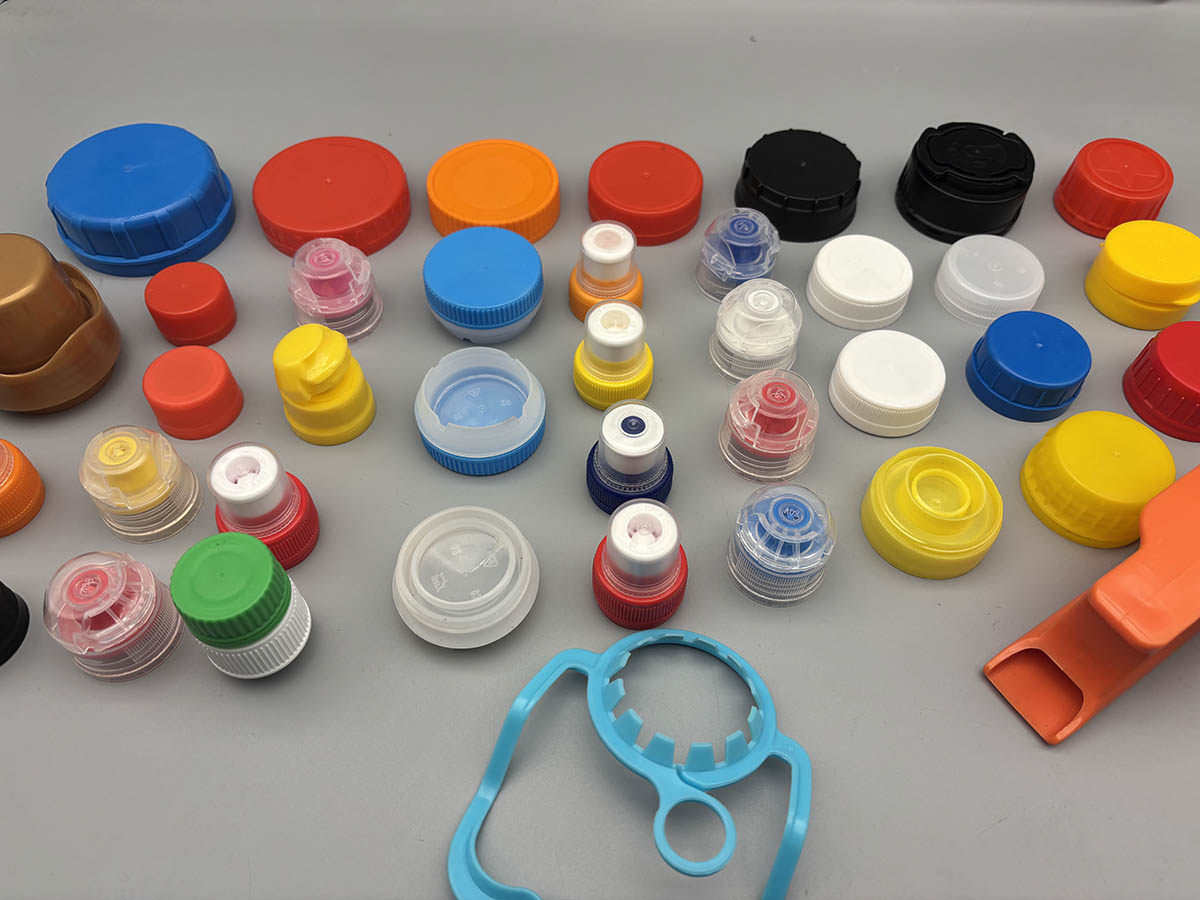
How to Choose the Right Cavitation for Your Bottle Cap Mold: A Practical Guide
Berni Mould Engineering Team | PET Preform & Cap Mold Solutions
Cavitation is the single most consequential specification in a bottle cap mold purchase. It determines your output ceiling, your unit cost floor, your machine compatibility envelope, and — critically — whether the tool can hold dimensional consistency across millions of cycles. Yet cavitation is frequently treated as a “more is better” number. It is not. A 96-cavity mold running on an undersized press with marginal cooling produces more scrap per hour than a well-balanced 48-cavity tool running at its designed cycle.
This guide sets out a practical decision framework: how to calculate the cavitation your production target actually requires, where the ROI thresholds sit between cavity tiers, and what engineering capabilities a mold must possess at each level. The perspective is that of Berni Mould, a manufacturer specializing in PET preform molds and bottle cap molds — two tooling families that share a common demand for thermal precision, steel integrity, and cavity-to-cavity repeatability.
1. Start with the production equation, not a catalog number
The correct cavity count is a derived value, not a selected one. It follows from four inputs: target good output, cycle time, available production time, and the combined efficiency of uptime and yield. The industry-standard relationship is:
Required Cavities = (Target Good Caps × Cycle Time) ÷ (Available Production Time × Uptime × Good-Part Yield)
Consider a plant targeting 100,000 acceptable caps per day over 20 scheduled hours, using a 10-second cycle, with 85% uptime and 98% good-part yield. The calculation returns approximately 16.67 cavities, pointing toward an 18-cavity configuration as the minimum viable option — before engineering judgment is applied[reference:0]. This first-pass number is a floor, not a ceiling. The actual cycle time of a high-cavity tool may differ from the single-cavity benchmark, and yield behavior changes as cavity count rises. The equation forces discipline: it prevents buying a 64-cavity mold for a 15-million-cap annual program where a 24-cavity tool would deliver the same output with lower capital exposure and simpler maintenance.
For annualized planning, the same logic scales directly. At 8,000 operating hours per year, a 48-cavity tool at a 3.8-second cycle supports roughly 345 million caps annually; a 64-cavity platform reaches about 460 million; a 96-cavity system exceeds 720 million[reference:1]. These are capacity ceilings, not purchase recommendations. The question is always whether the volume justifies the step-up.
2. Cavitation tiers and their real engineering boundaries
The packaging industry has settled into three broad cavitation bands, each with a distinct technical character and commercial logic.
Low cavitation: 2–16 cavities
Low-cavity tools are the correct answer for prototyping, material qualification, large-diameter or thick-walled closures, and regional production programs below roughly 20 million caps per year. A 4-to-16-cavity mold can be built with a cold runner or semi-hot runner, simplified cooling, and standard tool steel, keeping both tooling CAPEX and maintenance complexity low[reference:2]. These tools tolerate product design iteration and changeover far better than high-cavity platforms. For a PET bottle cap mold program still validating a new closure geometry, a low-cavity pilot tool is not a compromise — it is the risk-appropriate choice.
Medium cavitation: 16–48 cavities
This is the productivity sweet spot for regional beverage bottling, personal care, and cosmetic closures. At this level, the mold must transition to a fully balanced hot runner system, and cooling design becomes a first-order variable rather than an afterthought. A 32-cavity tool typically requires 150–250 tons of clamping force; a 48-cavity tool moves into the 250–400 ton range, with corresponding increases in platen size and shot-weight demand on the injection unit[reference:3]. The 48-cavity tier is widely regarded as the lowest-capital entry point into serious high-volume closure production, with payback achievable on medium-scale contracts[reference:4].
High cavitation: 48–144+ cavities
High-cavity tooling is built for dedicated beverage and water cap lines where the cap is a high-volume, low-margin commodity and machine amortization must be distributed across millions of units. A 96-cavity mold may require 550–650 tons of clamp force, a 96-drop balanced valve-gate hot runner, and cooling water demand in the range of 240 L/min[reference:5]. The per-unit economics are unmatched — labor and overhead are spread across an enormous output base — but the tool is unforgiving of thermal imbalance, maintenance neglect, or marginal machine condition[reference:6]. High cavitation is not simply “more of the same”; it is a different engineering discipline.
3. The engineering constraints that decide whether a cavity count actually works
A cavity count on a quotation sheet means nothing without the engineering architecture to support it. Three variables separate a functional multi-cavity mold from a costly liability.
Melt balance and hot runner integrity
In a 48- or 96-cavity tool, every cavity must receive polymer at the same pressure and temperature, simultaneously. The hot runner manifold must be rheologically balanced — naturally or geometrically — so that flow path length, shear history, and thermal exposure are identical from the machine nozzle to each gate[reference:7]. A runner imbalance that produces a 0.02 g weight variation at 16 cavities can become a sealing failure at 64 cavities. Berni Mould approaches multi-cavity bottle cap mold design with CFD-assisted flow balance verification before steel is cut, because correcting manifold imbalance after construction is among the most expensive mistakes in tooling.
Cooling uniformity and out-of-roundness
Cooling accounts for 60–70% of the injection molding cycle[reference:8]. In high-cavity production, the cap’s thin walls and deep thread geometry make thermal uniformity non-negotiable: a minor temperature gradient across the mold base translates into elliptical distortion (out-of-roundness), weak sealing lips, and inconsistent application torque. The engineering response is high-thermal-conductivity inserts — typically beryllium copper in core tips and thread zones — combined with conformal cooling circuits that follow the cap contour rather than a conventional drilled water line[reference:9]. In documented high-cavity retrofits, cooling-system redesign has reduced cycle time from 12 seconds to 9 seconds while cutting scrap from 2% to below 0.1%[reference:10]. For PET preform molds, the same thermal logic applies with even greater consequence: preform wall-thickness distribution and acetaldehyde generation are directly coupled to cooling uniformity.
Demolding mechanics and maintenance interchangeability
Every cavity carries its own core, cavity insert, thread detail, and ejection interface. In a 64-cavity tool, a single damaged core must be replaceable without hand-fitting or full-tool rework. Interchangeability tolerances — often held at 0.005 mm on critical sealing dimensions — determine whether maintenance is a scheduled task or a production crisis[reference:11]. The unscrewing or stripping mechanism must also synchronize across all cavities; even minor timing variance in thread release produces cap deformation, thread damage, or ejection jams. This is where precision bottle cap mold manufacturing capability is tested: not in the cavity count itself, but in the repeatability of every cavity’s mechanical action.
4. Machine fit: the constraint that overrides the spreadsheet
A cavitation decision that ignores the existing injection molding machine is a partial decision. Clamping force, platen dimensions, shot capacity, and cooling water availability all impose hard ceilings. A 48-cavity tool may be theoretically optimal for the volume, but if the plant’s largest press delivers 280 tons and the mold requires 350, the true cost of that cavity count includes a machine purchase or a tolling arrangement[reference:12]. The same applies to PET preform mold projects, where shot weight and injection pressure requirements scale with cavitation and preform gram weight. A practical cavitation selection therefore runs a machine-fit check in parallel with the production equation — not after the tool is ordered.
5. A practical selection sequence
For a manufacturer moving from requirement to tooling specification, the sequence that minimizes both capital risk and operational regret is:
- Calculate the required cavity floor using the production equation, with conservative uptime and yield assumptions.
- Map the result onto a tier — low, medium, or high cavitation — and identify the engineering architecture that tier demands (runner type, cooling strategy, steel selection, ejection mechanism).
- Run the machine-fit check against available clamp tonnage, platen size, shot capacity, and cooling infrastructure.
- Compare total cost of ownership across two cavity options — not just tooling price, but cycle time, scrap sensitivity, maintenance interval, and changeover flexibility.
- Verify the mold builder’s engineering evidence: flow simulation reports, cooling layout rationale, interchangeability tolerances, and references at the proposed cavity level.
The lowest practical cavity count that meets output targets, fits the machine, and preserves quality consistency is almost always the more profitable choice over a tool’s service life[reference:13].
Why Berni Mould
Berni Mould builds PET preform molds and bottle cap molds as integrated engineering systems, not catalog cavity counts. Our work begins with the production equation and the machine envelope, then proceeds through balanced hot runner design, conformal cooling integration, and interchangeability-controlled manufacturing. For clients scaling from pilot closure programs to dedicated high-cavity beverage lines, we provide cavity-level engineering rationale — simulation evidence, thermal strategy, and maintenance architecture — alongside the tool itself. The objective is not the highest cavity number on the market; it is the cavity count that performs at its designed cycle, at its designed yield, for the life of the tool.
Keywords: bottle cap mold cavitation, how to choose bottle cap mold cavities, PET preform mold, multi-cavity cap mold, bottle cap mold design, cap mold ROI, hot runner balance bottle cap mold, conformal cooling cap mold, Berni Mould, PET preform and cap mold manufacturer, high cavitation cap mold, low cavitation cap mold, bottle cap mold production capacity, cap mold unit cost